👉 Mechacera Water maximizes the oxidative decomposing of Chlorine through a catalytic reaction that occurs when an aqueous Chlorine solution is brought into contact with special ceramics.
Outdoor Grease Trap
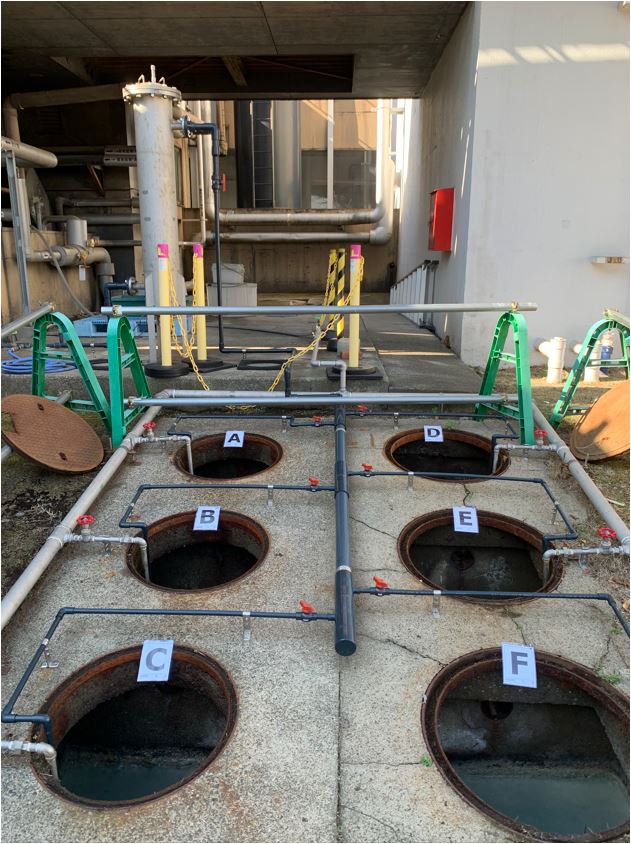
◉ Before the installation of the Mechacera device, a strong odor was generated.
June 16, 2018.
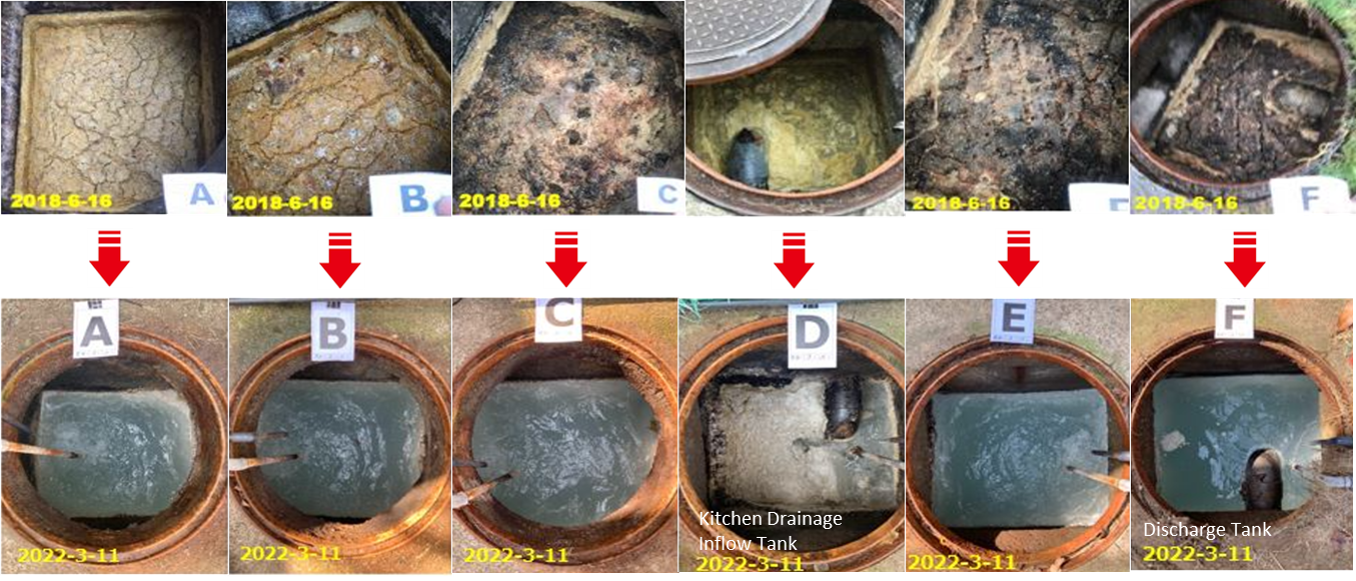
◉ The Grease Trap lid were not able to an open state, but after 6 months of installation of Mechacera device, the Bad odor was almost gone along with Scum.
as of December 10, 2018
Grease Trap with Mechacera Device on 2024-1-31
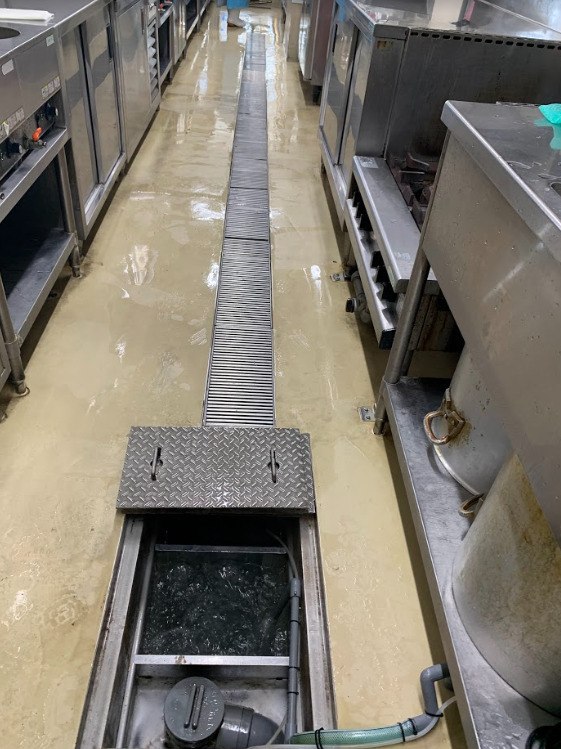
Kitchen Grease Trap
◉ Need NO electricity
◉ Deodorizes odors from grease traps
◉ Reduction of sludge (50-70%)
◉ Reduction of cleaning costs
◉ Maintains hygienic water quality by preventing bacterial growth
◉ Economical cleaning and maintenance
◉ Less clogging of pipes due to oil
◉ Saves money by using inexpensive Solid Chlorine
◉ Easy to handle and safe to use
◉ Easy to check Solid Chlorine consumption
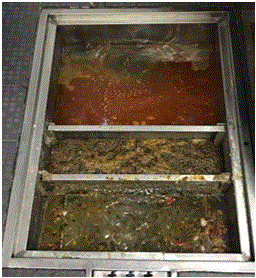
The first day Mechacera device was set
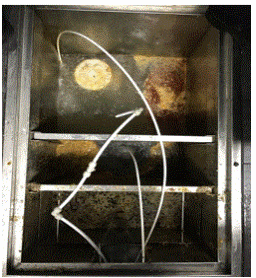
◉ Cooking oil and soft scum were decomposed by the MechaCera system, and the amount of oil and scum covering the water surface was reduced.
◉ At the same time, the water quality has improved from a cloudy state to highly transparent.
Note: Those white hoses are bringging Mechacera Water into 3 Grease Traps.
3 days later after Mechacera device was set
Oxidative decomposition and Chemical reaction of oil-containing Wastewater
~~~ Mechanism of Plant-Based Oil (Unsaturated Fatty Acid) Decomposition by Mechacera Water ~~~
Most plant-based oils used in food processing plants and commercial kitchens are primarily composed of unsaturated fatty acids.When sodium hypochlorite (or solid chlorine) and water come into contact with Mechacera balls (catalytic ceramics), "Mechacera water" is generated. Its powerful oil decomposition mechanism is as follows:
1. Generation of the Powerful Oxidizing Agent "Nascent Oxygen"
The aqueous sodium hypochlorite solution is hydrolyzed by the catalytic reaction of Mechacera to produce hypochlorous acid.
NaClO + H₂O→ NaOH + HClO
(Sodium hypochlorite + Water → Sodium hydroxide + Hypochlorous acid)
As the reaction proceeds further, "nascent oxygen," which has an extremely powerful oxidizing effect, is generated from the hypochlorous acid.
HClO → HCl + [O]
Hypochlorous acid → Hydrochloric acid + Nascent oxygen)
2. Hydrolysis of Oils and Fats
Oils and fats (triglycerides) react with water and undergo hydrolysis, breaking down into fatty acids and glycerin.
Oil/Fat + 3H₂O → 3R-COOH} + C₃H₅(OH)₃
(Oil/Fat + Water → Fatty acid + Glycerin)
The glycerin produced here is a typical trihydric alcohol and is highly soluble in water.
3. Oxidative Decomposition and Solubilization of Fatty Acids
Decomposed fatty acids are insoluble in water in their original state. However, "unsaturated fatty acids," which are abundant in plant-based oils, contain double bonds within their molecules, making them highly susceptible to oxidation. The powerful [O] (nascent oxygen) generated earlier acts upon these molecules, oxidizing and cleaving the double bonds.
◉Initial Stage: Insoluble fatty acids are oxidized and converted into low-molecular-weight compounds such as propionaldehyde (C₂H₅CHO) and propionic acid. These are water-soluble chemicals.
◉Reaction Progression: As the oxidation reaction repeats, the molecules are further broken down into smaller molecules, such as acetic acid (CH₃COOH) and acetaldehyde (CH₃CHO).
◉Final Stage: As oxidation continues, they are ultimately and completely decomposed into carbon dioxide (CO₂) and water (H₂O).
◉Conclusion: Disappearance of Scum (Floating Oil)
Under normal conditions, fats (oils) and water repel each other and remain separated. However, through the chain of catalytic and oxidative decomposition reactions caused by the aforementioned "Mechacera water," oils that are originally insoluble in water are transformed into water-soluble, low-molecular-weight compounds. As a result, the oils are decomposed and dissolved into the water, ceasing to exist as the scum that typically causes pipe blockages and foul odors.